
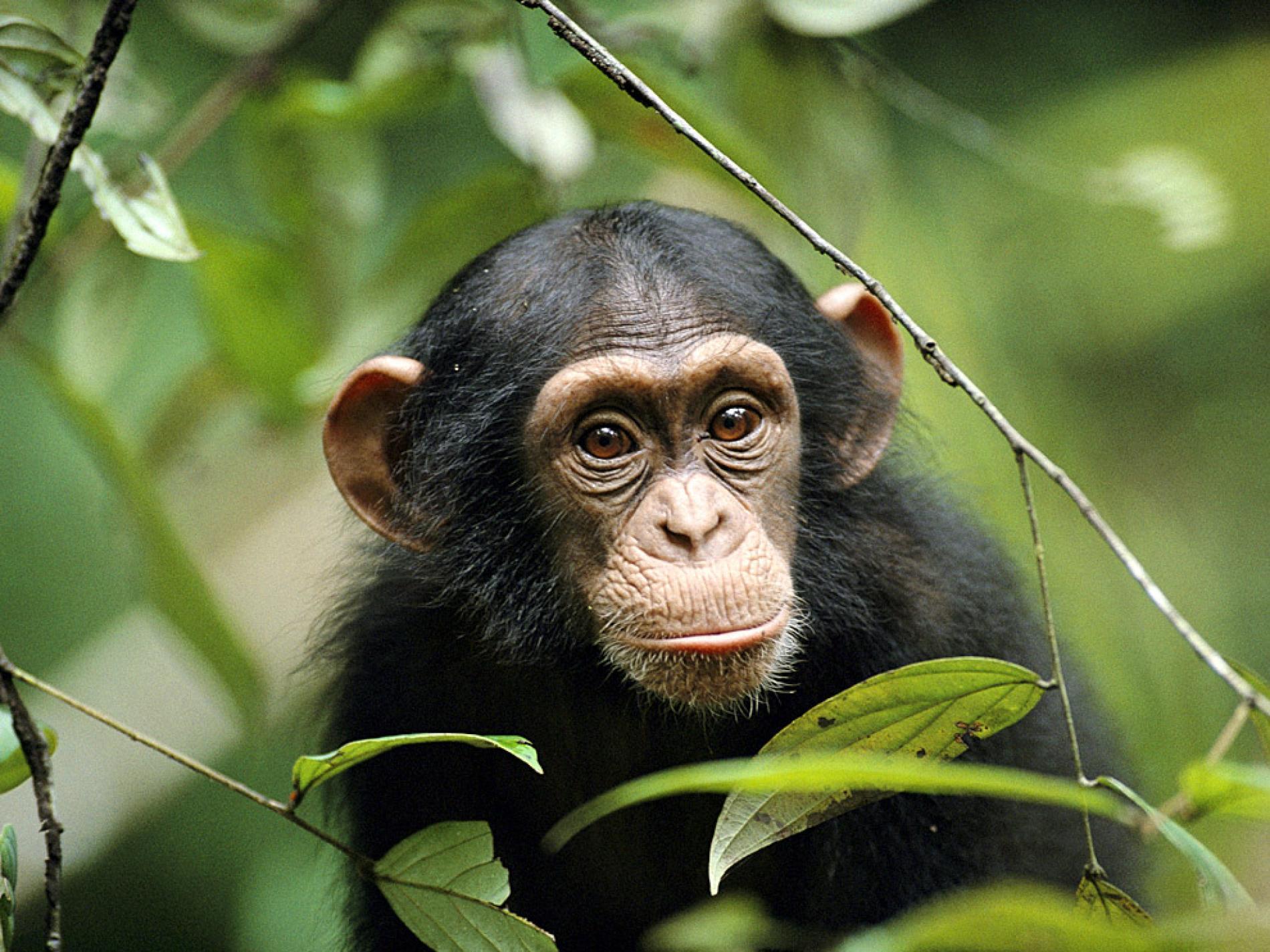
Our Inner Ape
Throughout the study of Hominin evolution, the quality of “prosociality” is often discussed in the context of the evolution lineage of Hominins and Great Apes. Throughout such discussions, an uncertainty often arises in the form of whether the astounding similar prosocial behaviors of Bonobos and Humans have evolved convergently, or was it a trait that was expressed by the last common ancestor of the two species. While the prosocial behaviors expressed by Chimps can be considered to be “too primitive” to be comparable to the ones exhibited by Humans and Bonobos, the existence of prosocial behaviors (perhaps “derived”) in Chimps raises questions in whether the last common ancestor of Chimps, Bonobos, and Humans possessed such behaviors. In this article, I will compare the prosocial behaviors found in Chimps, Bonobos, and Humans, and express why Bonobo’s prosociality is often seen as “convergent” to that of humans.
Before the views expressed above could be discussed, a few key terms that are essential to the question should be addressed. As mentioned in the discussion above, prosociality is a conclusive term for Mutualism, where both parties are involved in a beneficial act, and Altruism, where one party benefits at the cost of the “actor”. Overall, prosociality is defined as voluntary activities intended to benefit each other. The evolutionary mechanisms in question are homology vs. convergent evolution. Homology represents similarities between organisms due to inheritance from a common ancestor. On the contrary, convergent evolution demonstrates resemblance due to chance or similar environmental influences.
Prosociality in Homo, bonobos, and Chimpanzees often are different from each other. Significant differences could be found between bonobos and chimps due to a mixture of factors such as environmental influences and competition. Bonobos, when compared to Chimps, are more willing to cooperate among each other. In controlled experiments, Bonobos are more likely to share food, and tend to outperform Chimpanzees in social cognitive tasks such as gaze tracking. In the wild, Bonobos participate in social bonding activities such as sexual play to strengthen long-term relationships and to reduce tension. These occurrences could be attributed to reduced competitions between Bonobos such as less competitions for fallback foods. The most significant difference between Bonobos and Chimps can perhaps be seen in the junvilized behaviors of Bonobos. Bonobos demonstrate many “juvenilzed” traits when compared to Chimps such as food sharing, maternal dependence, play behavior, and non conceptive sexual behavior. The development of these traits can be attributed to the changes in the timing of developmental events in the life history of Bonobos. These changes are also known as heterochronic change.
Heterochronic changes in Bonobos can be attributed to a wide array of possible mechanisms. Some theorized mechanisms include higher oxytocin levels in Bonobos, decreased adrenaline in Bonobos, and an increase in the retention of thyroid hormones in Bonobos. It is evident that these aforementioned traits of Bonobos are vastly different from that of the Chimp’s, but the heterochronic changes in Bonobos are often theorized to also be present in humans. Decreased aggression (from a decrease in adrenaline, increase in Oxytocin) in humans have been theorized to have led to an increase in prosocial behaviors. Certain genes that are present in humans that may lead to prosocial behaviors have been switched off in Chimpanzees. Although the research is still in its early stage, such genes might be evidence for the existence of heterochronic changes in humans that are comparable to the changes observed in Bonobos. Besides heterochronic changes, Human prosocial behaviors can be found in infants, which can also be seen in the case of the Bonobo. Although Humans share significant similarities with Bonobos, there are a few key differences between the two. The cooperations between humans often occurs between unrelated individuals. This might be observed between Chimpanzees and other species alike; however, Humans are the only organism to cooperate on a large scale with unrelated counterparts. Cooperations between societies are observed in humans that have accomplished activities such as salmon harvesting that are difficult to accomplish with a small group of people.
The traits and characteristics mentioned above can serve to distinguish between homology and convergence between Humans and Bonobos. To distinguish homology from homoplasy, there are a few methods. One of such methods would be to compare the early development of cooperation between Humans and Bonobos. For instance, although the wings of bats and birds remain similar in form, the embryonic development of wings between bats and birds can be differentiated, thus marking their convergence. Although not enough embryonic data have been gathered for Bonobos’ prosociality traits, similar mechanisms such as the timing in the secretion of hormones and the retention of juvenile traits have been observed in both humans and bonobos’ developments. For instance, the retention of hormones such as thyroid may be present in both humans’ and bonobo’s psychological developments that aids in a decrease of aggression and supports prosocial behaviors. This similarity in the development of prosociality between the two species might serve as a possible evidence that the prosociality seen between the two are in fact formed as a result of homology.
There is, perhaps, more evidence against the view that prosicality seen in both species of Humans and Bonobos are results from homology. One such evidence can be found in the phylogenetic tree for hominids. From the current understanding of hominoid evolution, humans diverged from the lineage away from Chimps and Bonobos around seven million years ago. This divergence signifies for a convergent evolution. It is accepted that prosociality in humans and chimps are not homologous due to their servere differences and a lack of prosociality behaviors in Chimps. If the Chimps’ prosocial traits indeed more closely resembles that of the LCA of Pan and Humans’, then there is no doubt that a lack of prosocial behaviors in Chimps is the primitive trait, thus proving that Humans and Bonobos’ prosociality evolved convergently. However, there is evidence that supports the opposite of the aforementioned statement. A more pasimousous tree can be constructed where Chimps’ lack of prosocial traits is not the primitive trait, but rather a derived trait from the LCA of Pan and Humans. This rejects the claim that Humans and Bonobos have evolved their prosocial behaviors convergently by claiming that prosocial behavior is the primitive trait. However, parsimony is not the only criteria for the construction of a phylogeny; it is merely a tool for speculation. In order to clarify this comparison, a “definite” conclusion in the prosocial trait is required.
Another criteria of homology is the minuteness of detail. It can be used to differentiate between the wings of bats and birds, and how their different details in their construction classifies them as homoplasy rather than homology. Similar conclusions can be drawn for the purpose of prosocial actions in Chimps and Humans. Although a large conclusion can be drawn from the purpose of prosocial actions for both species in that it provides a fitness benefit to both, the statement is too broad for it to properly examine the minuteness in the details in each behavior. Prosocial behaviors in Bonobos such as food sharing might be a result of their diet (of fallback foods) and a lack of competition. Bonobos benefit from these behaviors by exerting less energy in food gathering and competition. These interactions among Bonobos might also help to strengthen their bonding and form more connected groups. The same can be said for humans. However, Humans possess more complex benefits from the sharing of foods, as seen in the risk reduction reciprocity theory. In it, Humans share food among each other inorder to supplement nutritional income when food availability is unpredictable. Human hunters would take turns contributing food when the others’ hunts are unfruitful. This reveals a more complex benefit of prosocial behaviors seen in humans, demonstrating that the two prosocial behaviors of Humans and Bonobos are in fact, different in details, and therefore not homologous.
Other differences between Humans and Bonobos can be found in the Human males’ significant contribution to calorie intake of their partners as well as humans’ abilities to cooperate on a large scale, between unrelated members of societies. These all serve to differentiate Human prosociality and those observed in Bonobos and Chimps. However, more research could be done in the area of genetics to further distinct prosociality in Bonobos from humans.
Genes relating to the delay of Thyroid retention, for example, explains the heterochronic change that is theorized to be present in both Bonobos and Humans. If the genes relating to both are found to be identical, then strong evidence is found for the homology of both species. Moreover, the genes’ changes in the development stage for both species can also be analyzed to see whether the “turning” on or off of the gene is experienced at similar stages by both species. If similarities could be observed, then homology can again be discussed.
Overall, more evidence suggests a convergent evolution of prosocial behaviors in Humans and Bonobos. However, more research in the genetic field could perhaps provide a more definite theory. Other data such as the coexistence of Humans and Bonobos in the same habitat or time period can also inspire insights into the evolution mechanisms for both. Scientific advancements are rapid. Perhaps in the near future, the developments and genetics of Pan and Humans can be more closely studied, and their astounding similarities, be more appreciated.