
Written by Peizhe Lu in collaboration with Dr. Chenyang Zhao
Before stepping into the lab at Cleveland Clinic’s Lerner Research Institute, Dr. Zhao’s path into science had already taken her across continents, disciplines, and ways of thinking. Trained as an immunologist, her research centers on how immune cells respond to stress, inflammation, and disease, and how small molecular changes can reshape immune behavior in powerful ways.
Dr. Zhao has spent more than a decade studying macrophage biology, tumor immunology, and immune signaling pathways that influence conditions such as cancer, liver disease, and sepsis. Her current work focuses on post-translational modifications of STAT2, a key signaling molecule in the interferon response, and how these modifications affect disease progression. By examining immune responses at the molecular level, her research aims to uncover why inflammation sometimes protects the body and other times causes harm.
Her work has moved from field research in Tibet to gene modification studies in the United States, from academic leadership in China to cancer biology research back at Cleveland Clinic. Along the way, she has remained deeply interested not only in immune cells, but in the people behind the science. In this conversation with MJAS, Dr. Zhao reflects on her research, her career across two scientific cultures, and the quieter moments that sustain her life in science.
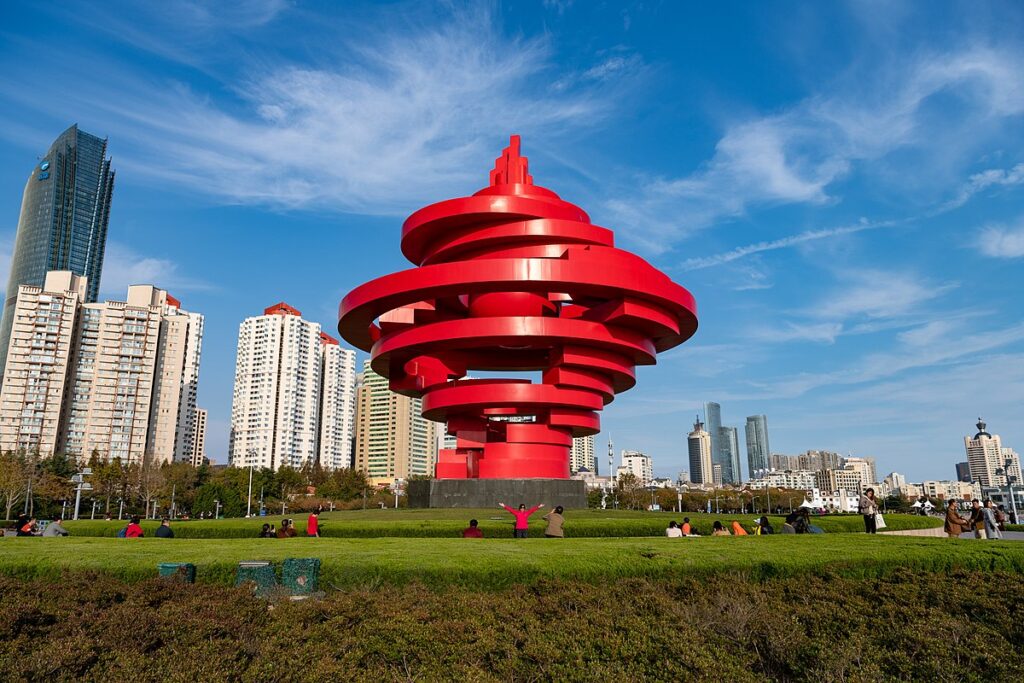
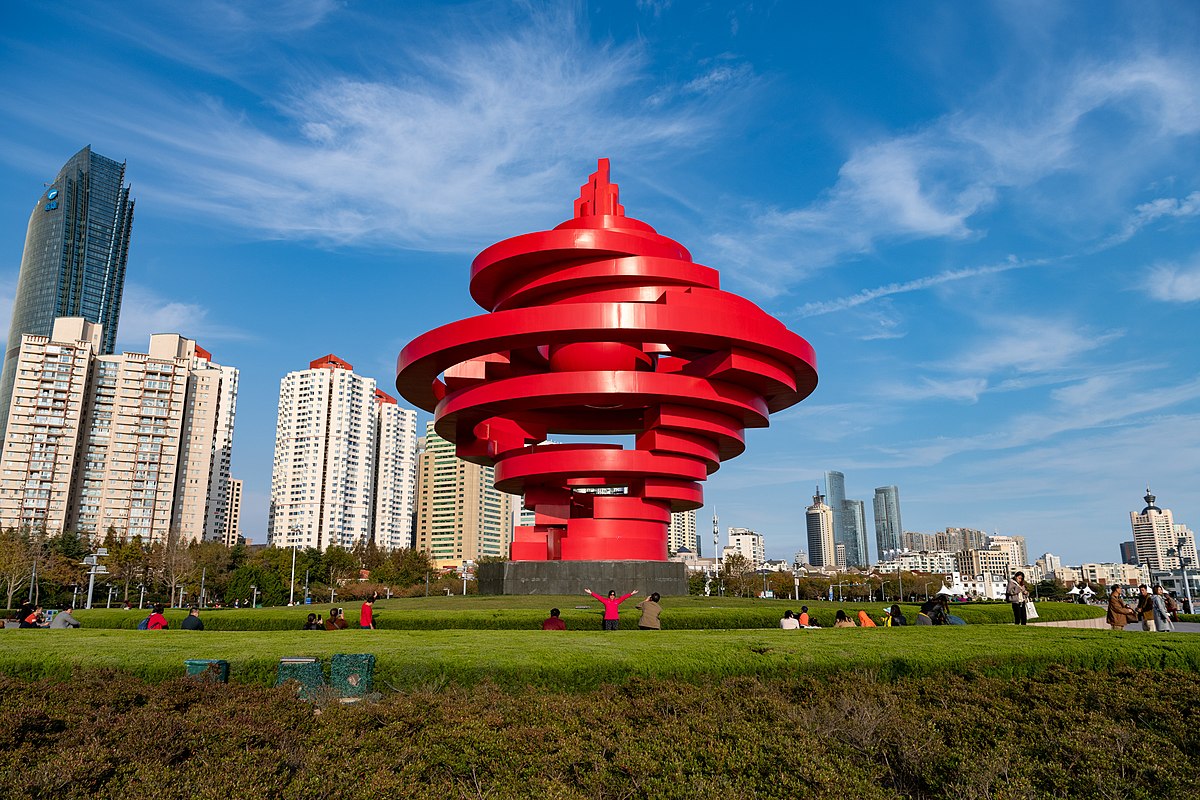
“Wind of May” at May Fourth Square in Qingdao, China, where Dr. Zhao completed her PhD and research.
Icebreaker: What’s your favorite type of beverage?
Dr. Zhao: Tea. I drink it every day. It is something familiar and calming, especially during long workdays. When experiments do not go as planned, making tea reminds me to slow down and reset.
If you were not a scientist, what do you think you might be doing instead?
Dr. Zhao: I think I would still be working with people in some way. Maybe teaching, or writing. I enjoy explaining ideas and helping others see things differently. Science just happens to be the language I use now.
Can you explain your research as if you were speaking to an undergraduate with minimal scientific background?
Dr. Zhao: My research focuses on how the immune system decides when to protect the body and when it accidentally causes harm. The immune system is powerful, but it needs careful control. If it reacts too strongly or for too long, it can damage healthy tissues.
I study immune cells called macrophages. You can think of them as the body’s cleanup crew and emergency responders. They fight infections and help repair damage, but in diseases like cancer, liver disease, or sepsis, they can behave in harmful ways. Right now, I study how small chemical changes inside cells affect immune signaling proteins such as STAT2. These changes can completely alter how immune cells respond during disease.
Your early research involved antioxidant compounds and fieldwork in Tibet. How did that experience shape you?
Dr. Zhao: That period taught me curiosity and patience. Collecting herbs and studying natural compounds showed me that science is not confined to laboratories. It is connected to environment, culture, and history. Many experiments failed, but that failure was important. It taught me how to stay committed even when results are uncertain.
You have conducted research in both the United States and China. How do those environments differ?
Dr. Zhao: The scientific talent is strong in both places, but the systems encourage different behaviors. In the United States, there is often more emphasis on independence and asking risky questions. In China, research tends to be more structured and goal driven. I believe the best science happens when creativity and discipline exist together.
What was one of the most difficult moments in your career, and how did you move through it?
Dr. Zhao: There were times when experiments failed repeatedly and funding felt uncertain. During those moments, I questioned whether I was making progress at all. What helped was focusing on small steps and remembering why I entered science in the first place. Talking with mentors and colleagues also made a big difference.
What advice would you give to students considering a PhD, especially those navigating international barriers today?
Dr. Zhao: Be honest about your motivations. A PhD requires persistence more than brilliance. Focus on building strong skills and asking good questions wherever you are. Science is global, even if movement feels more limited now. And find mentors who care about your development, not just your output.
Outside of research, how do you recharge?
Dr. Zhao: I enjoy quiet routines. Walking, reading, and spending time alone help me think clearly. Research can be mentally demanding, so having moments of simplicity is important.
How does your work affect people who may never read a scientific paper?
Dr. Zhao: Many diseases I study affect ordinary families, including sepsis, cancer, and inflammatory disorders. Understanding how immune signaling fails helps improve treatments and avoid therapies that cause harm. Even if people never hear the technical terms, the care they receive is shaped by discoveries like these.
What keeps you motivated after so many years in science?
Dr. Zhao: The unanswered questions. The immune system is complex and often surprising. Each discovery leads to new questions. Knowing that this work may eventually help patients makes the challenges worthwhile.
“Science is demanding, but it is also deeply meaningful. That balance is what keeps me going.” – Dr. Zhao