
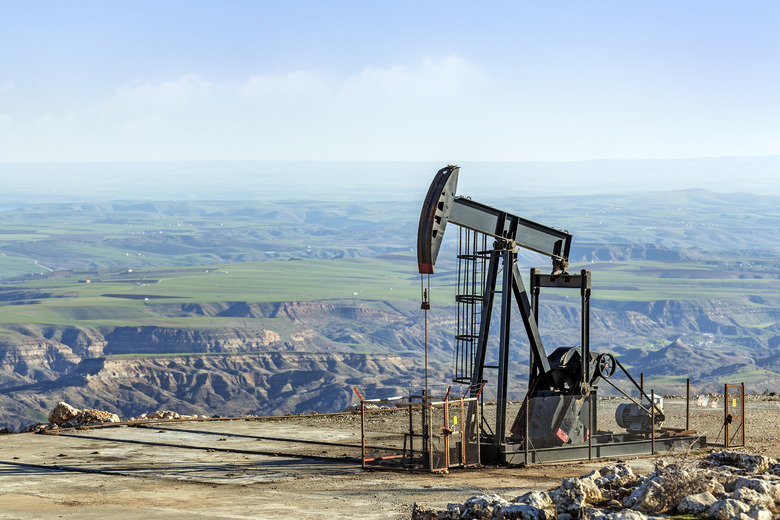
Introduction: Iraq and the Political Economy of Resource Dependence
Iraq is a country endowed with substantial hydrocarbon wealth. Its proven oil reserves rank among the largest globally, and oil revenues account for approximately 90 percent of total government income and a majority share of gross domestic product. On the surface, such resource abundance appears to provide Iraq with favorable conditions for infrastructure development, fiscal stability, and long-term economic growth. Yet despite this apparent advantage, Iraq has struggled to establish durable democratic institutions. According to the Economist Intelligence Unit’s Democracy Index, Iraq ranks near the bottom of global democratic performance, reflecting persistent weaknesses in political participation, accountability, and institutional trust.
This contradiction between material abundance and political underperformance is commonly described as the “oil curse,” a subset of the broader “resource curse” hypothesis. Scholars have long observed that countries rich in natural resources often experience weaker democratic institutions, higher levels of repression, and slower political modernization than resource-poor counterparts. While oil is the most frequently cited example, similar dynamics have been observed in countries dependent on other extractive resources, including minerals and precious metals. The negative relationship, therefore, is not unique to oil but may reflect structural features shared across resource-dependent economies.
This paper advances three central arguments. First, it analyzes the mechanisms through which oil wealth has impeded democratic development in Iraq. Second, it examines mineral dependence in apartheid-era South Africa as a comparative case in which a different resource produced analogous political outcomes. Third, it argues that if Iraq had possessed abundant mineral wealth comparable in scale to its oil reserves, similar constraints on democratic development would likely have emerged. In doing so, this paper demonstrates that it is not the type of resource itself but the fiscal and political structures created by resource dependence that undermine democratic accountability.
Oil and the Constraints on Democratic Development in Iraq
To evaluate the broader applicability of the resource curse, it is first necessary to examine how oil has shaped Iraq’s political trajectory. Political economists have identified three primary mechanisms through which oil wealth undermines democratic development: reduced reliance on citizen taxation, enhanced capacity for political repression, and stagnation in economic and social modernization. Together, these mechanisms characterize what Mahdavy termed the “rentier state,” in which government revenue is derived largely from external rents rather than domestic economic productivity.
Iraq exemplifies this model. Oil exports account for approximately 65 percent of GDP and nearly all government revenue, dramatically reducing the state’s dependence on domestic taxation. This fiscal structure weakens the traditional accountability relationship between citizens and the state. Historically, taxation has functioned as a catalyst for political representation, as illustrated by early European states and colonial America, where citizens demanded institutional participation in exchange for fiscal contribution. In rentier states such as Iraq, this dynamic is inverted. Low income tax rates reduce public pressure for representation, while governments face diminished incentives to respond to citizen demands.
Although Iraq’s income tax rates are not negligible in nominal terms, their contribution to government revenue is minimal. Income tax accounts for only a small fraction of GDP and public finance when compared to advanced democracies, where taxation constitutes a central pillar of state funding. As a result, Iraqi citizens possess limited leverage over fiscal decision-making, and the state operates with reduced accountability. The absence of a strong tax bargain contributes to political disengagement and weakens democratic norms.
Oil wealth also enables repression. Rentier governments can allocate resource revenues toward security services, patronage networks, and coercive institutions that suppress opposition and entrench elite power. Iraq’s modern political history provides clear evidence of this mechanism. Under Saddam Hussein, oil revenues financed expansive security apparatuses that eliminated political rivals and consolidated one-party rule. In the post-2003 period, oil wealth has continued to facilitate corruption, elite collusion, and the manipulation of political institutions, further marginalizing citizen participation.
Finally, oil dependence contributes to stagnation in economic diversification and social modernization. According to modernization theory, democratic development is closely linked to industrial diversification, educational expansion, and occupational specialization. These processes cultivate an informed and organized citizenry capable of collective political action. Iraq’s reliance on oil has discouraged investment in manufacturing, technology, and human capital. Educational outcomes remain poor by international standards, and the absence of diversified economic opportunities limits the emergence of an independent middle class. Together, these factors impede the social foundations necessary for democratic consolidation.
Mineral Wealth and Democratic Repression: The Case of South Africa
To determine whether oil is unique in its political effects, this paper examines apartheid-era South Africa as a comparative case of mineral-based rentierism. Throughout the twentieth century, South Africa’s economy was heavily dependent on mineral exports, particularly gold and iron ore. At various points, mining accounted for nearly half of total exports and a substantial share of GDP, positioning South Africa as a de facto rentier state during its apartheid period.
Mineral wealth played a critical role in sustaining South Africa’s authoritarian political system. As in oil-rich states, government revenue derived largely from external rents rather than broad-based taxation. The apartheid state relied heavily on profits from mining operations and foreign investment, allowing it to ignore the political demands of the majority population, who were largely excluded from both taxation and governance. This fiscal independence from citizens closely mirrors the taxation dynamics observed in oil-dependent economies such as Iraq.
Mineral wealth also enabled repression. Revenue from gold mining financed extensive security institutions that enforced racial segregation, suppressed political opposition, and imprisoned dissidents, most notably Nelson Mandela. Without sustained income from mineral exports, the apartheid regime would have struggled to maintain the coercive infrastructure necessary for its survival. The state’s ability to repress opposition was therefore directly linked to its control over resource revenues.
Finally, mineral dependence contributed to long-term stagnation in economic diversification and human capital development. During apartheid, South Africa underinvested in education and technological innovation, particularly for nonwhite populations. This legacy persists today, as the country continues to struggle with educational inequality and limited growth in high-skill sectors. As modernization theory predicts, the absence of widespread educational and occupational advancement delayed political mobilization and reinforced authoritarian rule.
Counterfactual Analysis: Mineral Wealth and Iraq’s Democratic Trajectory
The parallels between oil-dependent Iraq and mineral-dependent South Africa suggest that the political effects observed in Iraq are not exclusive to hydrocarbons. Instead, they arise from a common reliance on externally generated export revenue. The critical variable linking resource dependence to democratic regression is not the material itself but the scale and structure of revenue flows.
If Iraq had possessed mineral deposits capable of generating export revenues comparable to oil, the same three mechanisms would likely have emerged. Government reliance on mineral rents would have reduced dependence on citizen taxation, weakened accountability, financed coercive institutions, and discouraged economic diversification. Whether derived from oil wells or mining licenses, large-scale external rents would have produced similar fiscal and political incentives.
Some may argue that South Africa’s experience is not directly comparable to Iraq due to South Africa’s unique racial and historical context. While racial ideology played a central role in shaping apartheid, it does not fully explain the regime’s durability. Resource wealth provided the material foundation that allowed apartheid to persist despite domestic resistance and international pressure. In this sense, racial inequality was exacerbated by, rather than independent from, the country’s mineral-based political economy. Similarly, Iraq’s sectarian divisions interact with, but are not solely responsible for, its democratic deficits.
Conclusion
This paper has argued that Iraq’s democratic shortcomings are best understood through the lens of resource dependence rather than oil alone. Oil wealth has undermined democratic development in Iraq by reducing reliance on citizen taxation, enabling political repression, and impeding social and economic modernization. These same mechanisms were observed in mineral-dependent apartheid-era South Africa, where precious metals played a role analogous to oil in sustaining authoritarian rule.
The comparative analysis demonstrates that different natural resources can produce similar political outcomes when they generate large, centralized streams of external revenue. It is therefore the structure of resource dependence, rather than the specific commodity, that constrains democratic accountability. Had Iraq relied on mineral wealth instead of oil, its political trajectory would likely have been similar.
Future research should extend this analysis to other resources, including natural gas, rare earth elements, and renewable energy inputs. Understanding how different forms of resource dependence shape political institutions will be essential as global economies transition toward new sources of strategic value. Ultimately, resources themselves are not destiny. It is the governance of resource wealth that determines whether abundance becomes a foundation for democracy or a barrier to it.
References
Ross, M. L. (2001). Does oil hinder democracy? World Politics, 53(3), 325-361. doi:10.1353/wp.2001.0011
Aaron, H., & Slemrod, J. (2016, July 28). The South African tax system: A nation in microcosm.
Mitchell, T. (2013). Carbon democracy: Political power in the age of oil. London: Verso
Deutsch, K. W. (1961). Social mobilization and political development. American Political Science Review, 55(3), 493-514. doi:10.1017/s0003055400125134
Iraq Economic Monitor: From War to Reconstruction and Economic Recovery, spring 2018. (2018). doi:10.1596/29688
Sanders, James (2006). Apartheid’s Friends: The Rise and Fall of South Africa’s Secret Service. John Murray.
Pillay, V. (1981). The Role of gold in the economy of apartheid South Africa. New York: United Nations. Unit on Apartheid. Dept. of Political and Security Council Affairs.
South Africa has one of the world’s worst education systems. (n.d.). Retrieved April 23, 2021, from https://www.economist.com/middle-east-and-africa/2017/01/07/south-africa-has-one-of-the-worlds-worst-education-systems
Bhattacharya, R., & Lowenberg, A. (2009, September 24). Impact of APARTHEID on economic Growth: Implications and empirical evidence from South Africa.
Luciani, G. (2015). Allocation vs. production states: A theoretical framework. The Arab State, 65-84. doi:10.4324/9781315685229-4
Le Billon, P. (2005). Corruption, reconstruction and Oil governance in Iraq. Third World Quarterly, 26(4-5), 685-703. doi:10.1080/01436590500127966
Patterns and problems of economic development in Rentier states : The case of Iran, Hossein mahdavy (Harvard). (2015). Studies in the Economic History of the Middle East, 438-477. doi:10.4324/9781315000312-36
Lipset, S. M. (1959). Some social requisites of democracy: Economic development and political legitimacy. American Political Science Review, 53(1), 69-105. doi:10.2307/1951731
F. Gregory Gause II, “Regional Influences on Experiments in Political Liberalization in the Arab World,” in Rex Brynen, Bahgat Korany, and Paul Noble, eds., Political Liberalization and Democratization in the Arab World, vol. 1, Theoretical Perspectives (Boulder, Colo.: Lynne Rienner, 1995)
Jill Crystal, Oil and Politics in the Gulf: Rulers and Merchants in Kuwait and Qatar (New York: Cambridge University Press, 1990). doi: 10.1017/cbo9780511558818.008
Iraq. (n.d.). Retrieved April 23, 2021, from https://taxsummaries.pwc.com/iraq/individual/taxes-on-personal-income
Iraq (ranked 137TH). (2020, November 13). Retrieved April 23, 2021, from https://www.prosperity.com/globe/iraq
Tax revenue (% of GDP) – Iraq. (n.d.). Retrieved April 23, 2021, from https://data.worldbank.org/indicator/GC.TAX.TOTL.GD.ZS?locations=IQ
Iraq. (n.d.). Retrieved April 23, 2021, from https://www.opec.org/opec_web/en/about_us/164.htm
South Africa – mining. (n.d.). Retrieved April 23, 2021, from https://www.nationsencyclopedia.com/Africa/South-Africa-MINING.html
Australian’s Taxes and Economy at a Glance. (n.d.). Retrieved April 23, 2021, from https://treasury.gov.au/review/tax-white-paper/at-a-glance